
LongHorn vs Texas Roadhouse – An Honest Comparison
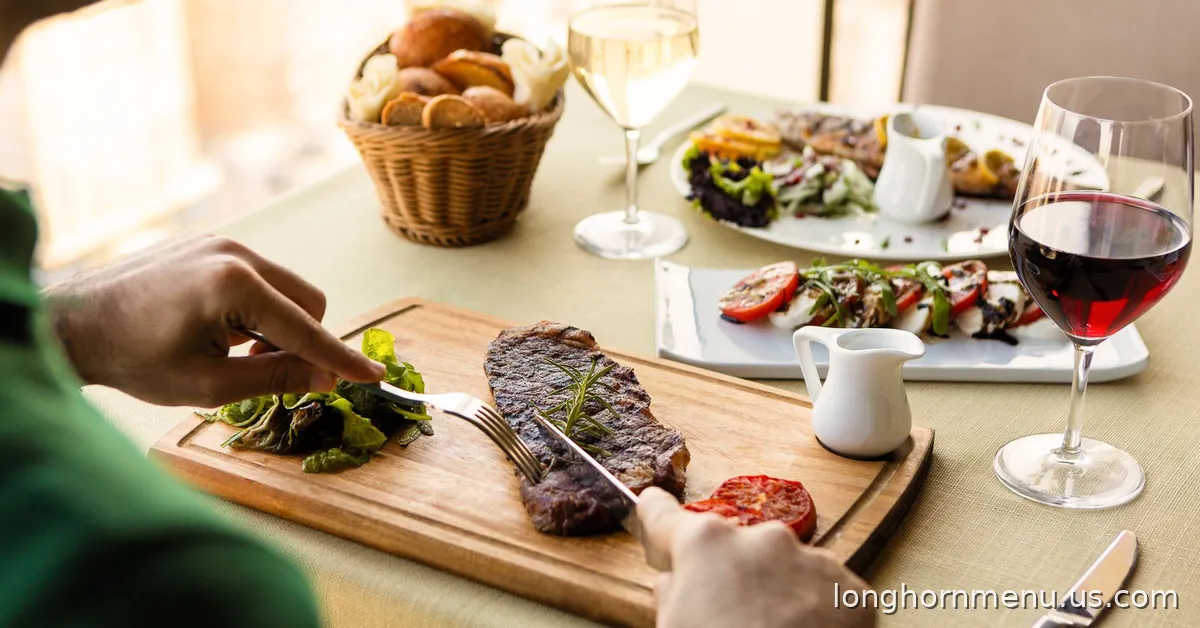
LongHorn and Texas Roadhouse are the two biggest casual steakhouse chains in America, and they are closer than their fans admit: a 6 oz sirloin is around $16.99 at both, both serve USDA Choice hand-cut steaks grilled over flame, and neither takes reservations. The real differences are the atmosphere (Texas Roadhouse is louder, with line dancing and free peanuts; LongHorn is calmer), the value windows (LongHorn lunch plates from $9.99; Texas Roadhouse Early Dine around $12.99), and the ownership (LongHorn is part of Darden; Texas Roadhouse is independent).
Table of Contents
Two Chains, Two Stories
LongHorn Steakhouse was founded in 1981 in Atlanta, Georgia, by George McKerrow Jr., who opened the first restaurant — LongHorn Steaks Restaurant & Saloon — on Peachtree Street. It is now owned by Darden Restaurants, which acquired it in 2007 through the purchase of RARE Hospitality for around $1.4 billion. Headquarters are in Orlando, Florida, and the chain counts 639 restaurants, most of them company-owned.
Texas Roadhouse was founded in 1993 in Clarksville, Indiana, by Kent Taylor, who opened the first restaurant in a mall just across the river from Louisville, Kentucky, where the company is still headquartered. It is an independent public company, listed on the Nasdaq as TXRH, and it counts about 690 restaurants in the United States, plus franchised locations abroad — roughly 790 system-wide.
The twelve-year age gap shows in the brands. LongHorn is the older, quieter chain: a Western steakhouse with a calmer dining room, a Darden corporate parent, and a menu built around two signature steaks. Texas Roadhouse is the louder, younger chain: line dancing servers, a glass case of hand-cut steaks at the front, free peanuts on every table, and a founder's story that is still central to the brand. Both are casual dining steakhouses. The difference is the room.
The Steaks: USDA Choice on Both Sides
The steak comparison is the one that matters most, and it is close. Both chains serve USDA Choice steaks, hand-cut in-house, grilled over an open flame. Both season simply and let the meat do the work. LongHorn's steaks are seasoned with its Prairie Dust blend and grilled by certified Grill Masters; Texas Roadhouse's are hand-cut by an in-store butcher and displayed in a glass case before cooking.
LongHorn's signature steaks are Flo's Filet — a center-cut filet, 330 calories for 6 oz — and the Outlaw Ribeye, a 20 oz bone-in ribeye at 1,250 calories. Its biggest cut is the 22 oz LongHorn Porterhouse at 1,280 calories. Texas Roadhouse's signature is the USDA Choice Sirloin — its top-selling steak — with a Ft. Worth Ribeye in 12 oz and 16 oz, a New York Strip, Dallas Filets, and a 23 oz Porterhouse T-Bone at the top of the menu.
The meaningful difference is prime rib. Texas Roadhouse serves prime rib; LongHorn does not carry it on the current menu. If prime rib is what you want, the choice is made for you. The other difference is the cut list: LongHorn's eight cuts include the 14 oz 7-Pepper Crusted New York Strip, a pepper-crusted cut Texas Roadhouse does not match, while Texas Roadhouse's sirloin range runs from 6 oz to 16 oz against LongHorn's 6 oz and 8 oz. The best steaks guide ranks LongHorn's eight cuts in detail.
Prices: The Same Entry Point, Different Value Windows
A 6 oz sirloin is around $16.99 at both chains — the same entry price for the same cut. That is the headline, and it is the fairest single comparison: the cheapest steak on the menu, at the same size, at the same estimated price.
Beyond the entry point, the prices diverge by cut and by size rather than by chain. LongHorn's Outlaw Ribeye (20 oz) is around $34.99; Texas Roadhouse's Porterhouse T-Bone (23 oz) is listed from around $34.99 to $35.99 at surveyed locations. LongHorn's Flo's Filet (6 oz) is around $26.99. Both chains' dinner entrees mostly fall in the same band, and both chains' prices are estimates that vary by location — neither publishes a national price list.
The value windows are where the chains genuinely differ. LongHorn's lunch plates run Monday to Saturday, 11 a.m. to 3 p.m., from $9.99 — the same sandwich is $9.99 at lunch and $14.49 at dinner. Texas Roadhouse's Early Dine runs Monday to Thursday, 3 p.m. to 5 p.m., with 11 entrees for around $12.99, each with two sides and rolls. LongHorn wins lunch; Texas Roadhouse wins the early dinner. The lunch menu page covers LongHorn's lunch in full.
Atmosphere: Loud vs Calm, Peanuts vs Bread
The atmosphere is the biggest real difference between the two chains, and it is the one that decides most visits. Texas Roadhouse is loud: line dancing servers, a jukebox, Willie Nelson-themed tables, a bucket of free in-shell peanuts on every table, and baskets of fresh-baked rolls with honey cinnamon butter. It is a family celebration room, and it is proud of it.
LongHorn is calmer. The dining room is a Western steakhouse — dark wood, warm lighting, a quieter hum — and the complimentary item on the table is honey-wheat bread with sweet butter, not peanuts. There is no line dancing and no peanut shells on the floor. It is the steakhouse you pick for a quieter dinner, a date, or a business meal.
The peanut difference matters for a practical reason too: anyone with a peanut allergy should know that Texas Roadhouse serves in-shell peanuts at the table, while LongHorn does not. The allergen menu page covers LongHorn's allergen picture, including the Guest Relations number for specific questions.
Seating, Loyalty and the Fine Print
Neither chain takes reservations in the traditional sense. LongHorn runs Call-Ahead seating only: call, join the waiting list, arrive when your table is close. Texas Roadhouse runs a call-ahead waiting list at most locations on the same model. Both can have long waits on Friday and Saturday evenings, and both reward calling ahead.
The loyalty programs are similar in shape and different in detail. LongHorn's eClub is a free email club: sign up, get a free appetizer with one adult entree, plus birthday and promotional offers. Texas Roadhouse's VIP Club is also free to join, and members get a free appetizer coupon after signing up plus birthday and anniversary offers. Neither has a points program — both are email clubs with a signup appetizer.
The kids menus are both paid. LongHorn's Kids Menu has five items from $6.99 to $10.99. Neither chain runs a kids-eat-free program. Neither runs a chain-wide senior discount or a chain-wide happy hour — Texas Roadhouse has no published chain-wide happy hour either, and LongHorn's Prime Time runs at participating locations only. The deals page covers LongHorn's honest picture.
The Verdict: Which Should You Choose?
LongHorn's edge is the lighter menu and the lunch value. Its grilled shrimp (160 calories), Lemon Garlic Chicken (240) and salmon (300) give it a light-entree list that Texas Roadhouse does not match as clearly, and its lunch plates from $9.99 are the cheapest full meals either chain offers. Its nutrition guide is thorough, with full figures for 103 of 130 items and a detailed allergen chart.
Texas Roadhouse's edge is the energy and the Early Dine value. The room is more fun, the rolls and peanuts are a draw in themselves, and the Early Dine list — 11 entrees around $12.99 with two sides — is the best early-dinner deal in casual steakhouse dining. Its prime rib is a cut LongHorn does not offer.
For the steak itself, the honest answer is that both are USDA Choice, hand-cut, and grilled over flame — the difference is the room, not the meat. Pick LongHorn for a quieter dinner, a lighter meal, or a weekday lunch. Pick Texas Roadhouse for a loud family night, an early dinner, or prime rib. Either way, call ahead.
Frequently Asked Questions
Which is older, LongHorn or Texas Roadhouse?
LongHorn was founded in 1981 in Atlanta; Texas Roadhouse was founded in 1993 in Clarksville, Indiana. LongHorn is owned by Darden Restaurants; Texas Roadhouse is an independent public company (NASDAQ: TXRH). LongHorn has 639 restaurants; Texas Roadhouse has about 690 in the US.
Which is cheaper, LongHorn or Texas Roadhouse?
Very close. A 6 oz sirloin is around $16.99 at both chains. LongHorn's lunch plates from $9.99 undercut Texas Roadhouse's regular prices, but Texas Roadhouse's Early Dine — 11 entrees for around $12.99, Monday to Thursday, 3 to 5 p.m. — is the better early-dinner deal. Both are estimates and vary by location.
Which has better steaks?
LongHorn's signature steaks are Flo's Filet and the 20 oz Outlaw Ribeye; its biggest cut is the 22 oz Porterhouse. Texas Roadhouse's signature is the USDA Choice Sirloin, with a 23 oz Porterhouse T-Bone at the top. Both chains hand-cut USDA Choice steaks and grill over an open flame.
Which takes reservations?
Neither takes reservations in the traditional sense. LongHorn runs Call-Ahead seating only. Texas Roadhouse also runs a call-ahead waiting list at most locations. Both can have long waits on Friday and Saturday evenings.
Which has free peanuts and bread?
Texas Roadhouse serves free peanuts and fresh-baked rolls with cinnamon butter. LongHorn serves complimentary honey-wheat bread with sweet butter, but no peanuts. If peanuts matter to you — or if anyone in your group has a peanut allergy — that is a real difference.
Which should I choose?
LongHorn, for lunch value and for the lighter menu — its lunch plates from $9.99 and its grilled shrimp, salmon and chicken give it the edge for a light or cheap meal. Texas Roadhouse, for the loudest, most energetic atmosphere and for Early Dine. For the steak itself, both are USDA Choice, hand-cut, and grilled over flame — the difference is the room, not the meat.
More from the blog
- All blog posts
- The 8 Best Steaks at LongHorn – Ranked & Compared
- LongHorn Gift Cards & eClub – What They Are Worth
- LongHorn Gluten-Sensitive Guide – What You Can Eat
- Healthiest Options at LongHorn – Lightest Meals by the Numbers
- Highest-Protein Items at LongHorn – Ranked by the Numbers
- How to Order at LongHorn: Dine-In, Call-Ahead, To-Go & Delivery
- LongHorn Kids Menu Guide – Prices, Calories & What to Order
- LongHorn Lunch Guide – Plates, Prices & the Sunday Rule
Related guides

Natalie Brooks
Natalie Brooks writes about American steakhouse menus, prices and nutrition. She checks every dish against the chain's own published nutrition guide before it goes on the page, and she would rather say a number is unverified than print a guess.